A Door That Hides the Kitchen Is Still Honest
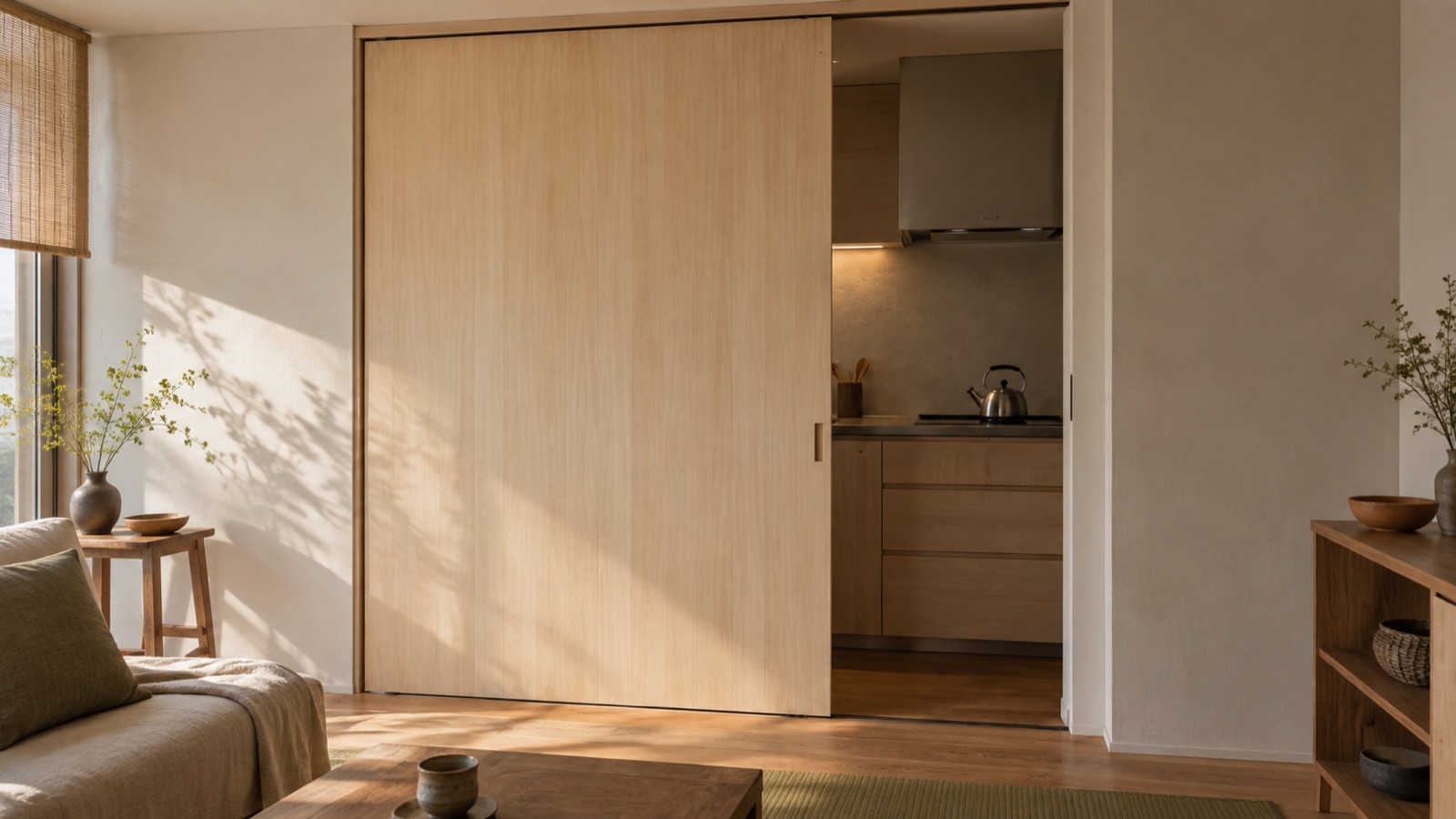
In a two-bedroom flat off Yamate-dori, the induction hob sits behind a panel of pale paulownia so plain it looks unfinished, and when the panel slides shut the kitchen vanishes into the wall as though it had never asked to be looked at. A friend showed it to me the way you show off a coat's lining — quietly, wanting you to notice the stitching, not the cut.
This is not a trick. Japanese houses have hidden their kitchens behind screens for longer than anyone has photographed them — a fusuma panel, a length of noren, a half-wall just tall enough to keep the rice cooker's steam out of the sitting room. What reads abroad this month as a discovery, the disappearing kitchen folded behind cabinetry and accordion doors, is closer to a habit we never stopped having. The West is only catching up to the idea of a room that doesn't perform.
The difference between a kitchen that disappears well and one that just hides a mess is entirely in the running gear. Good sliding hardware — the kind that takes weight without a shudder, that closes on its own for the last centimetre — costs more than the panel itself, and it is the part nobody photographs. Cheap track slams the door like an afterthought; good track closes it the way a held door closes for you, without your ever noticing the hand.
My own kitchen is smaller than this one and has no door to speak of, only a curtain the width of a dish towel, but I understand the impulse. A room that can vanish is a room that lets you decide, each evening, whether you are still cooking or already finished. Some nights I want the pot left out, unglamorous, an admission. Other nights I want the whole business folded away before I sit down, so the room can be only a room again, not a kitchen pretending to rest.
The panel in that Nakameguro flat clicks home at the exact moment the kettle finishes, a small percussion neither of us planned, and for a second the whole apartment sounds like a held breath being let go.
Mio Tachibana was born in Kyoto, trained as an architect and left the drawing board to write about the rooms people actually live in. She keeps a 48-square-metre flat in Tokyo with one good chair and too many bowls, and believes a room is a decision about how you want to be tired at the end of the day.